

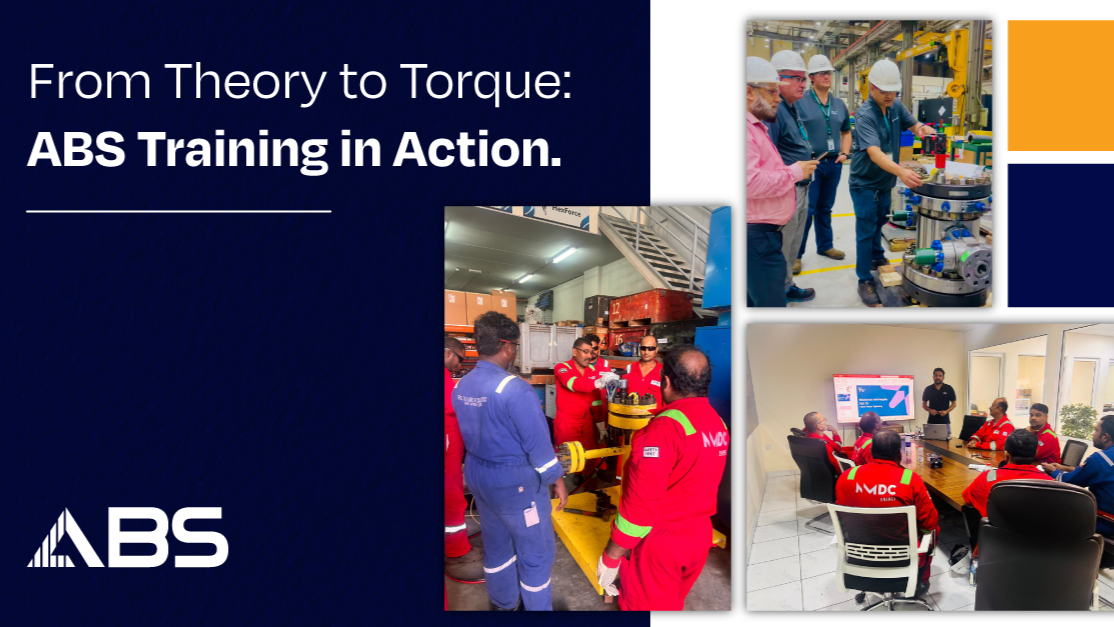
The Critical Role of Training in Joint Integrity: Why Skill Matters More Than Ever
In high-pressure industries such as oil & gas, power, manufacturing, and heavy engineering, joint integrity isn’t just a technical requirement — it’s a frontline safety responsibility. A single improperly torqued bolt can lead to leaks, shutdowns, equipment failure, or catastrophic accidents. Yet, despite the risks, many organisations continue to rely on unvalidated or untrained personnel for bolting operations
It’s not the tools alone that ensure safety. It’s the skill behind the tools.
1. Skill Validation: The Foundation of Safe and Reliable Joint Integrity
Skill validation ensures that technicians understand not only how to use bolting tools, but why each step matters. From knowing the correct torque values, to following the specific tightening sequences, to understanding the difference between manual and controlled bolting systems — skill validation bridges the dangerous gap between assumption and accuracy.
Formal validation also standardises performance. Two individuals using the same tool can produce entirely different results if one lacks the technical grounding. Training ensures Precision, consistency, repeatability, and adherence to the global best practices.
2. Skilled vs. Unskilled Personnel: The Difference Is Measurable
The difference between skilled and unskilled operators shows up immediately in quality of output:
- Skilled technicians achieve correct tensioning and torquing operation
- Unskilled personnel often rely on “feel,” leading to under-tightening, over-tightening, or inconsistent torque values
- Skilled operators are faster, more confident, precise and significantly more aligned with safety and compliance requirements
- Errors from untrained personnel often go unnoticed until they result in failure
When joints are expected to withstand pressure, vibration, thermal cycling, and heavy loads, the margin for error becomes zero. Skilled hands eliminate that uncertainty.
3. The Risks of Unskilled Labour: Hidden, Expensive, and Sometimes Irreversible
Using unskilled or unvalidated workers for critical bolting tasks can expose companies to:
- Leakages and rework
- Plant downtime and production loss
- Premature equipment damage
- Unsafe operating conditions
- Legal liabilities and audit failures
- Environmental hazards and safety incidents
Every one of these risks comes with a cost — financial, operational, and reputational. Most failures traced back to joints are not due to poor equipment, but due to improper assembly practices.
4. How ABS Bridges This Gap with Certified Training & Skill Validation Programs
ABS has made Joint Integrity Training a core part of its mission to improve operational safety across industries. Through structured, hands-on, and certification-driven programs, ABS ensures that every technician:
- Understands torque theory and correct tool usage
- Learns proper bolt-tightening procedures and sequences
- Gains confidence through supervised practical sessions
- Is validated for competency before being deployed on-site
Our training modules are aligned with global standards and supported by experienced engineers who have worked on complex, high-risk applications across India.
Because at ABS, we believe a trained technician is the strongest safety barrier any plant can have.
If you want your operations to run safer, smoother, and without surprises — start with training. ABS is here to make that happen.