

The ABS Way: Why Engineering Consultation Comes Before Tool Selection
The ABS Way:
In industrial maintenance, customers rarely wake up thinking they need a hydraulic torque wrench or a bolt tensioner.
What they really need is a solution.
It could be a leaking flange during a critical shutdown, inaccessible bolted joints on a wind turbine, a complex maintenance application in a refinery, or the need to improve safety and productivity while reducing downtime. The challenge is rarely about the equipment itself—it's about achieving the desired outcome safely, efficiently, and reliably.
This is where The ABS Way begins.
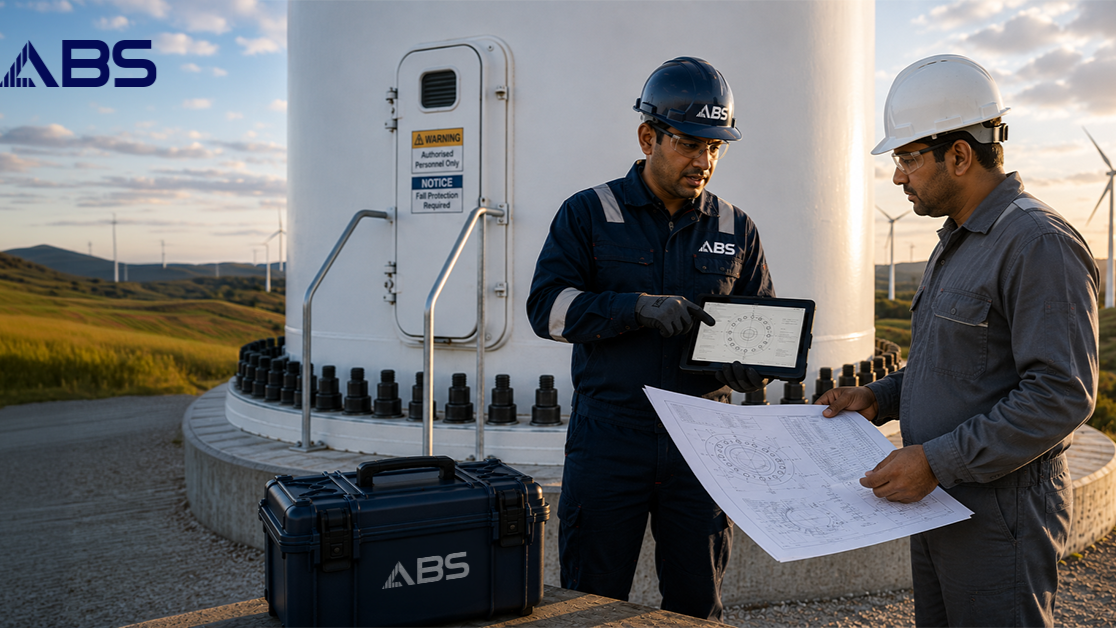
At ABS, every customer engagement starts with understanding the application, not recommending a product. Before selecting a tool, our teams take the time to study the operating environment, site conditions, accessibility, joint configuration, bolt size, torque requirements, safety considerations, and project timelines. These factors determine the right engineering approach, ensuring that the solution performs effectively under actual operating conditions.
Selecting the right equipment is never a one-size-fits-all exercise. A hydraulic torque wrench may be ideal for one application, while hydraulic tensioning may provide greater accuracy and joint integrity for another. In some situations, torque guns or specialized bolting solutions may offer the best outcome. Equally, customers may benefit more from a rental solution than purchasing equipment outright for a short-term shutdown. Every recommendation is driven by engineering logic rather than product preference.
Delivering the right solution requires collaboration across multiple teams within ABS. Sales works closely with Engineering, Design, Manufacturing, Technical Support, and Service to evaluate every application from different perspectives. This cross-functional approach ensures that customers receive solutions that are technically sound, operationally practical, and commercially viable.
Our commitment doesn't end with recommending equipment. Wherever required, ABS supports customers through site demonstrations, product trials, technical consultations, operator training, and application guidance. These initiatives help customers gain confidence in the recommended solution while ensuring safe and effective implementation in the field.
More importantly, our relationship with customers extends well beyond project completion. Preventive maintenance support, calibration services, after-sales assistance, Annual Rate Contracts (ARCs), and continuous technical training ensure that equipment continues to perform reliably throughout its lifecycle. For us, customer success is not defined by a single purchase order but by the long-term value we create over years of partnership.
This consultative approach has helped ABS build lasting relationships across industries. Customers trust us not only to supply products but to help solve complex engineering challenges, improve operational efficiency, and support critical maintenance activities with confidence.
Because at ABS, engineering consultation is not an additional service offered after the sale.
It is the foundation of every solution we deliver.
That is The ABS Way.