

Calibration Transducers
Calibration Transducers
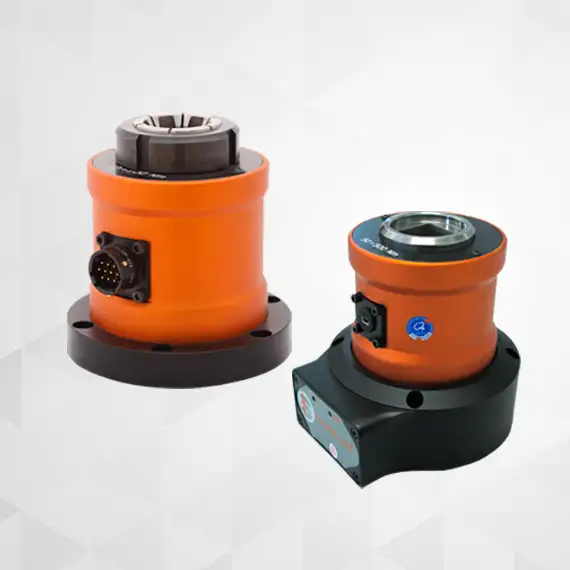
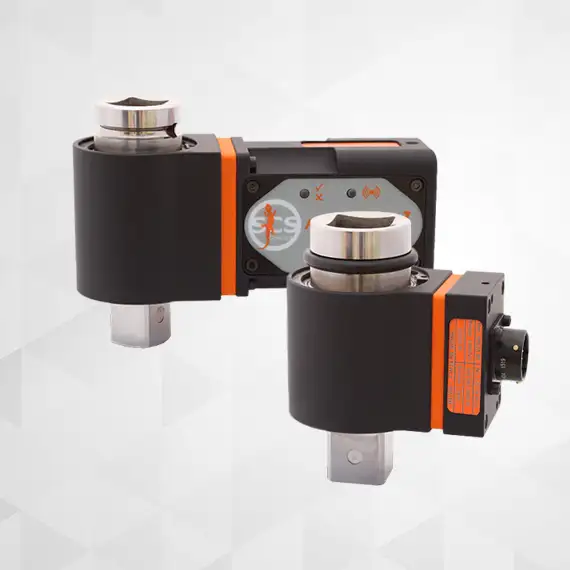
ABS offers a comprehensive range of Torque Transducers from SCS Concept Group. These highly accurate measurement instruments are crucial for the calibration, testing, and certification of tightening tools, ensuring traceable and verifiable quality control.
The transducers are available in various configurations to meet diverse operational and test requirements, covering both dynamic testing (tools in motion) and static verification (residual torque checking).
Read Less
Read More
SCS transducers are built for integration, precision, and efficiency in any calibration environment
High Capacity
Rotary transducers (RMC/RMCTA) are available in models ranging up to 5,000 Nm, accommodating most industrial power tools.
Rotary transducers (RMC/RMCTA) are available in models ranging up to 5,000 Nm, accommodating most industrial power tools.
Torque/Angle Measurement
Models are available that specifically measure both Torque and Angle, which is essential for complex tightening strategies.
Models are available that specifically measure both Torque and Angle, which is essential for complex tightening strategies.
Wireless Technology
Bluetooth models (BT) eliminate cables, enhancing portability and simplifying setup for data collection in the production area.
Bluetooth models (BT) eliminate cables, enhancing portability and simplifying setup for data collection in the production area.
Versatile Testing
Capable of measuring and verifying the performance of various tools, including electronic/digital wrenches, click wrenches, pneumatic, electric, battery tools, and pulse tools.
Capable of measuring and verifying the performance of various tools, including electronic/digital wrenches, click wrenches, pneumatic, electric, battery tools, and pulse tools.
Data Connectivity
Wired transducers use specific cables to connect measurement data directly to data collectors or external programs and databases.
Wired transducers use specific cables to connect measurement data directly to data collectors or external programs and databases.
Robust Design
Engineered for use in both controlled laboratory environments and demanding production settings.
Engineered for use in both controlled laboratory environments and demanding production settings.
Certify your tool performance with the verified accuracy of SCS Calibration Transducers.
Related Products
Related Accessories

Let's discuss further to get better results
Frequently Asked Questions
You will find answers to about our various industries and industry specialists service and more. Please feel
free to contact us if you don't get your question's answer in below.
free to contact us if you don't get your question's answer in below.
Bolt load measurement is the process of accurately determining the actual clamping force (tension) in a bolted joint. It is critical in safety-sensitive applications such as wind energy, oil & gas, power plants, mining, and heavy machinery, where incorrect bolt tension can lead to joint failure, leaks, vibration, or structural damage.
Smart sockets measure bolt load by directly sensing the applied load or elongation of the bolt during tightening or inspection. Unlike conventional torque tools, smart sockets provide real-time, repeatable, and accurate bolt load data, eliminating errors caused by friction, lubrication, or surface conditions.
Ultrasonic (often called sonic or solar) bolt load measurement uses high-frequency sound waves to measure the elongation of a bolt, which directly correlates to bolt tension. This method is highly accurate and is widely used for critical bolted joints, large-diameter bolts, and applications where torque methods are unreliable.
Bolt load measurement systems are commonly used in:
Wind turbine installation & maintenance
Oil & gas pipelines and flanges
Power generation plants
Steel structures & heavy fabrication
Mining and cement plants
Aerospace and heavy equipment manufacturing
These systems help ensure joint integrity, safety compliance, and repeatable assembly quality.
Calibration ensures that bolt load measurement equipment delivers accurate and traceable results. Regular calibration using certified calibration systems helps maintain measurement reliability, meet quality standards, and comply with audit and safety requirements in industrial environments.
Torque tightening only estimates bolt tension and is heavily affected by friction, surface finish, and lubrication. Bolt load measurement directly measures actual bolt tension, resulting in higher accuracy, reduced joint failures, improved reliability, and longer equipment life, especially in critical bolting applications.
Calibration transducers are used to test and verify torque tools such as electric, pneumatic, battery-powered, digital and click-type torque tools. They provide accurate torque measurements for calibration and quality control.
Yes, compatible calibration systems can be used for torque and angle measurement. This helps verify tools and tightening processes where both torque and rotational angle are important.
Calibration transducers can be used to test a wide range of torque tools, including electronic and digital torque wrenches, click wrenches, pneumatic tools, electric tools, battery-powered tools and pulse tools.